Tenant Directory
OPEN MONDAY to FRIDAY 8.30 am - 5 pm 01226 249590
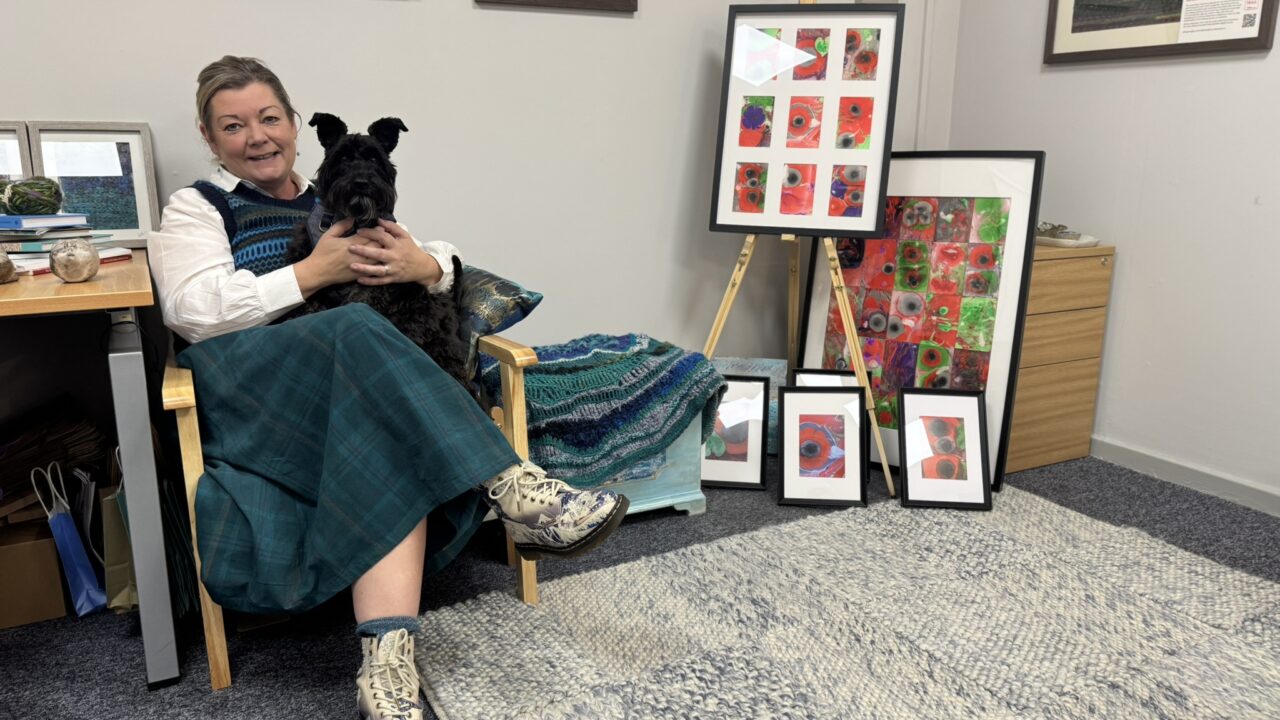
Barnsley artist Sally Hunter Philburn went back to university at 49 to study Fine Art. Now she combines her own creativity with community projects that help people of all ages make art and share it with others. Since moving into a studio at The Business Village, she’s had more space to run projects, plan workshops and spend time on her own art.
Sally works with all sorts of groups, from young people to older adults, including people with dementia, those recovering from strokes and young people going through difficult times. Some projects help people feel less isolated, while others bring different generations together through art.
She’s currently working with Fusion, a Barnsley organisation that gives young people the chance to experience arts and cultural activities. Their artwork has been displayed in The Bistro at The Business Village and at the Dearne Community Arts Festival. Some of their work is also due to feature in the Glowthorpe lantern parade in Goldthorpe.
While the young people are creating and displaying their own artwork, an older crochet group is making something for younger visitors. For the same event, they’ve crocheted constellations for a children’s activity trail, where children can follow the trail, complete activities and collect a certificate. The group includes a member who is 99.
At a recent arts festival, people in their eighties and nineties had a chance to see their own work on show. They were proud to see what they’d made displayed in public and, for Sally, that sense of achievement is what makes these projects so worthwhile.
“People seeing their work displayed in public can mean a lot,” says Sally. “It gives them something to share with family and friends, and a chance to see their work appreciated by others. If you can give people opportunities they’ve never had before, you never know where it’s going to lead for them.”
Before becoming an artist, Sally spent around 20 years working as a teaching assistant, supporting children with special educational needs. Art was something she loved, so she often took charge of creative activities at the school.
But she’d also been living with chronic illness since childhood and was diagnosed with fibromyalgia around ten years ago. Working full-time had become hard to sustain.
“I was trying to find a job that I loved, where I could get paid without exhausting myself,” says Sally. “I’d go to work, come home and end up in bed. I knew I couldn’t carry on like that forever.”
Art and creative activities had helped her through difficult times, so she began to think about how she could make them part of her working life. COVID helped set that change in motion. Unable to return to school during lockdown, she made art club videos for the children from her shed at home.
“I hated being on camera, but those videos led to my first paid freelance work,” Sally explains. “A company in Leeds got in touch and asked me to make videos to help children complete Arts Award activities at home.”
She also delivered art packs to families who were isolating. During her daily walks, Sally would see children’s pictures displayed in windows, inspiring her to find another way to bring their work together. Near the end of lockdown, she created a gallery along the school drive using large vinyl prints of children’s artwork, allowing families to see what they’d made without having to go inside the school.
Seeing how much these projects meant to children and their families made Sally think about what else she could do with art, rather than returning to the same routine at school. She left her full-time job to study Fine Art at university, while working part-time with the learning team at Barnsley Museums. In her second year, she became a Community Arts Engagement
Officer, a role that brought her into contact with a range of community groups, including young people and refugees.
Her degree and community work fed into each other. For her dissertation, she explored how art can support wellbeing and how creative groups can grow. She’d found a way to combine her love of art with work that could make a real difference to others.
Sally moved into her studio at The Business Village in January 2026. Before that, she’d been managing projects from a spare room at home, making it difficult to switch off.
The idea of a separate workspace came after another artist showed Sally around her studio. Seeing how much a dedicated space had helped her friend got Sally thinking about having one of her own. With regular work coming in, she decided to give it a go.
“I have room to spread out now,” Sally says. “I can leave materials out between sessions and work on several projects at once. I’ve worked on four or five different projects now this year, which I couldn’t have done from home.”
Sally’s studio is on the ground floor, making it accessible for her and visitors with mobility needs. Free parking is also useful when bringing materials in and out. And because she can access the building at any time, she has the flexibility to work in the evenings or at weekends around her other commitments.
Having a calm space of her own, away from distractions, has made a difference. Sally has already run a workshop there and plans to hold more. She also hopes to offer mindful art sessions for people working at The Business Village. She’s run similar sessions before, giving people a chance to try something creative and unwind at the end of the day.
Sally is also exploring ways to bring more artwork into The Business Village and has recently discussed the idea with Kevin Steel, Business Development Manager. Potential displays could feature either her own work or pieces made by the community groups she supports.
When community projects keep her busy, Sally’s own artwork can take a back seat. But now that she has a studio, she wants to make more time for her own creative practice.
Her Fine Art degree show featured giant crochet sculptures that people could get inside. Making them inspired her to learn how to spin wool, and she now uses her hand-spun wool to create landscapes, sometimes incorporating recycled fabrics and pieces of sari material.
In 2026, her work was selected for the Saltaire Art Trail, giving her another opportunity to share it with a wider audience. She now wants to build on this, finding ways to develop and sell her work while continuing her community projects.
Sally’s interest in art goes back to childhood. Growing up in a mining community, she says she might never have discovered art without a close friend whose mum often took her to the Yorkshire Sculpture Park. Those visits opened her eyes to new possibilities.
Now she wants to give others similar opportunities to explore art and share their work in public.
She’s also learnt not to wait for someone else to give her permission to try something new. “Sometimes, you just have to ask and see what happens,” she says.
That willingness to give things a go has helped her build a working life she never thought possible.
“I don’t feel like I go to work, ever,” she says. “I’ve had some terrible jobs in my life, but this one, this is not a job.”